
Summer Blues
No, not inverse SAD, but a few blue cheeses to go with blue skies...

Think of a blue cheese, I bet something powerful comes to mind, like a rich creamy Stilton, a peppery Roquefort or an eye-watering Cabrales, all hefty full-flavoured cheeses that come into their own in the winter. But blue cheese is for life, not just for Christmas, and with that in mind, here are a few suggestions for lighter blues for the Spring and Summer season.
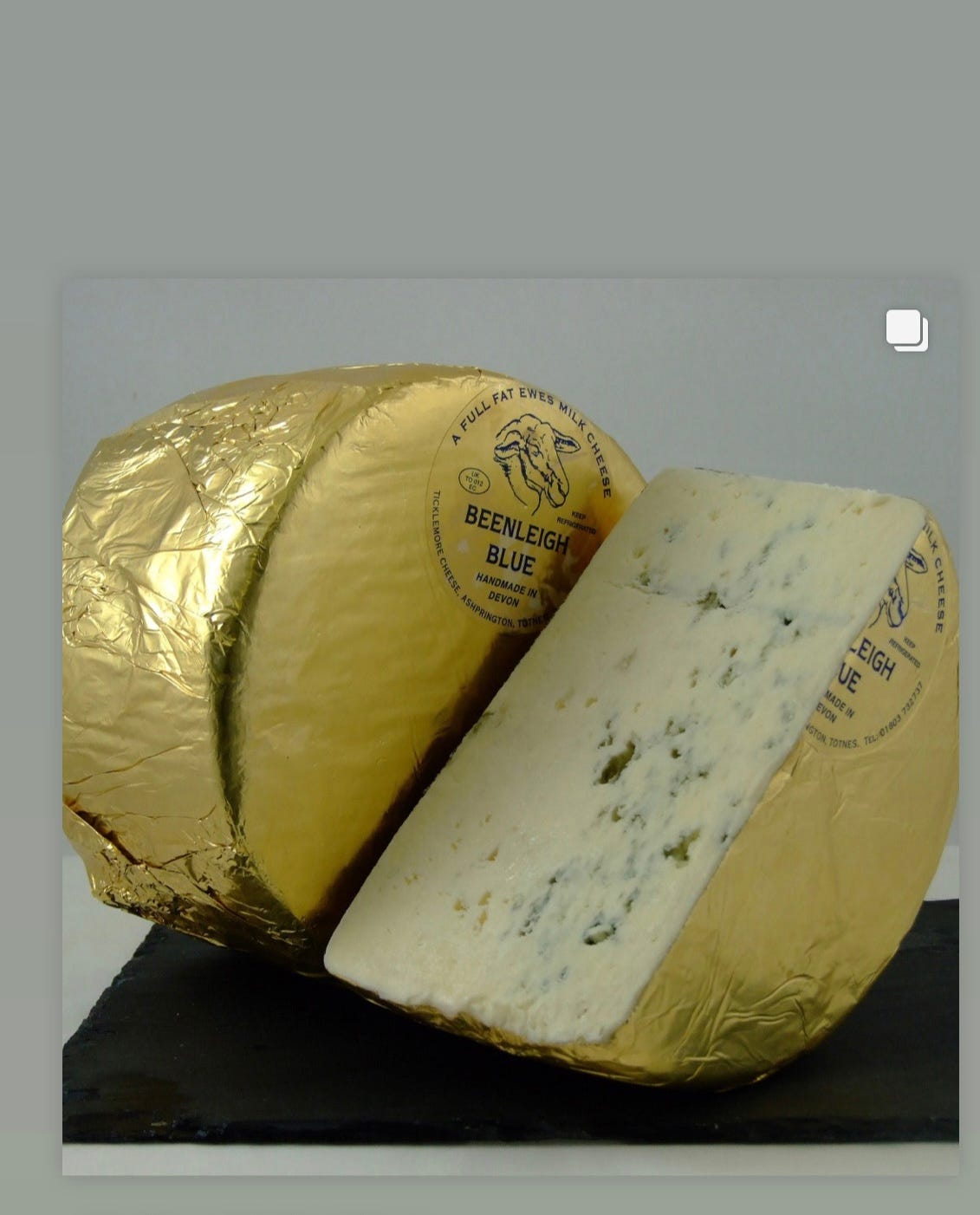
Beenleigh Blue
Made by Ben and Laura Harris in Devon.
Pasteurised sheep’s milk, vegetarian rennet.
The moist, fudgy texture of Beenleigh feels just right at this time of year, and delivers a startlingly sweet flavour with notes of tutti-frutti ice cream and pistachio barfi - an Indian fudge that my mum used to keep me quiet on art gallery visits in the 1970s. Most of the time this is a very delicate cheese - I seem to prefer more delicate flavours in hot weather - and I often use it to entice the blue-shy. Now and again you will get a much stronger batch so it is always worth trying before you buy. I’ve always thought that Beenleigh would make a great basis for an ice cream, perhaps enjoyed with a glass of Amontillado. If someone wants to give this a go, I’ll pop round with the sherry.
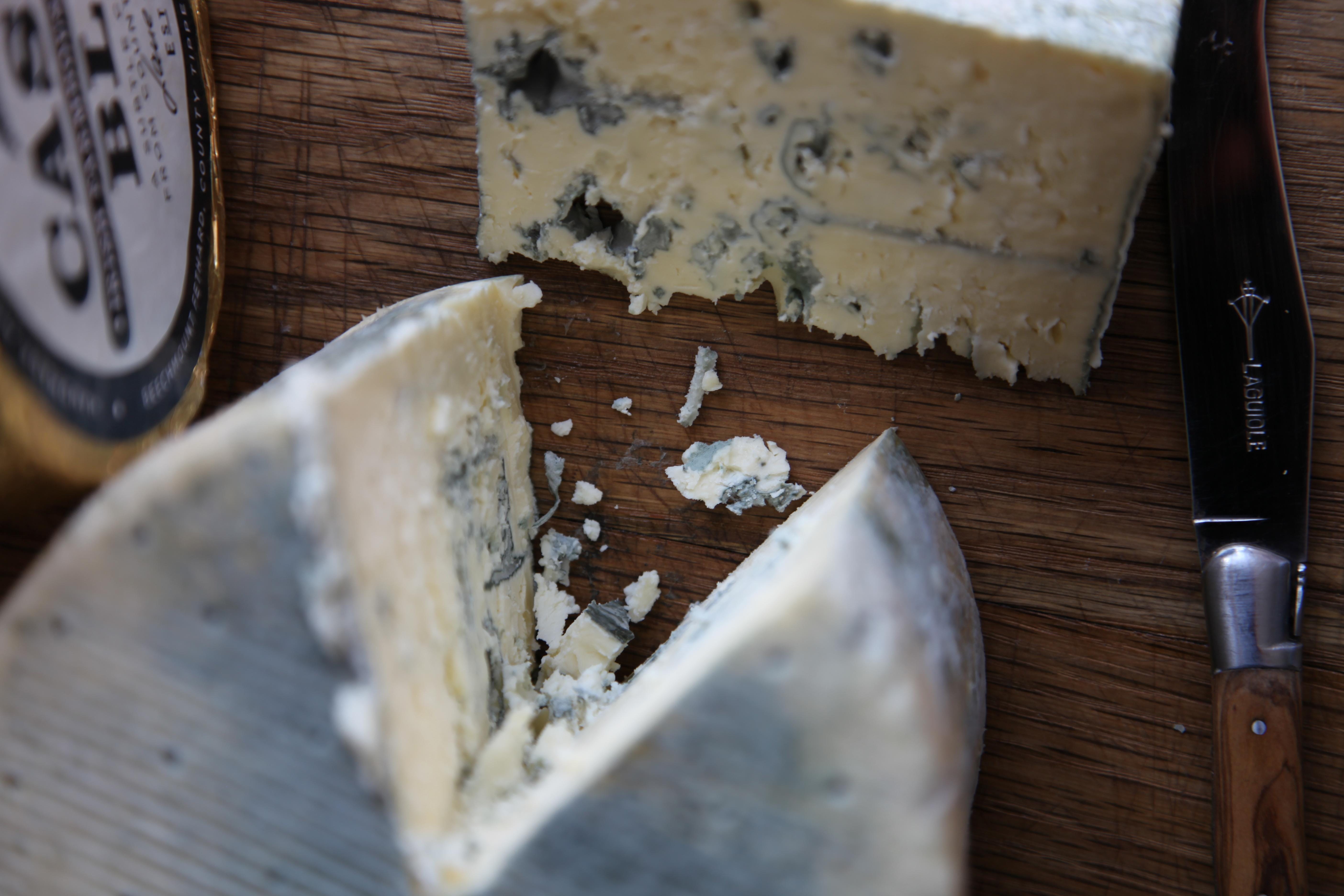
Cashel Blue
Made by the Grubb family and their team in County Tipperary, Ireland.
Pasteurised cows’ milk, vegetarian rennet.
Buttery. So buttery, with a gentle maltiness like a digestive biscuit, which is funny because a swipe of creamy Cashel on a digestive would make a lovely comforting snack at any time of year. The blue is well distributed throughout the cheese - a sign of skilful cheese making - and has a lighter shade, like a pair of stonewashed jeans, rather than the deeper indigo shade which usually suggests a more intense flavour. That creamy texture while still luxurious, feels lighter than the more fondanty mouthfeel of a Stilton or a Roquefort, which also makes Cashel a good bet for a summery cheese. I do love a dark beer like Porter or Stout with blue cheese, and I suspect a dark mild, lighter but still showing those chocolate and coffee notes, might make an enjoyable match with this lovely cheese.
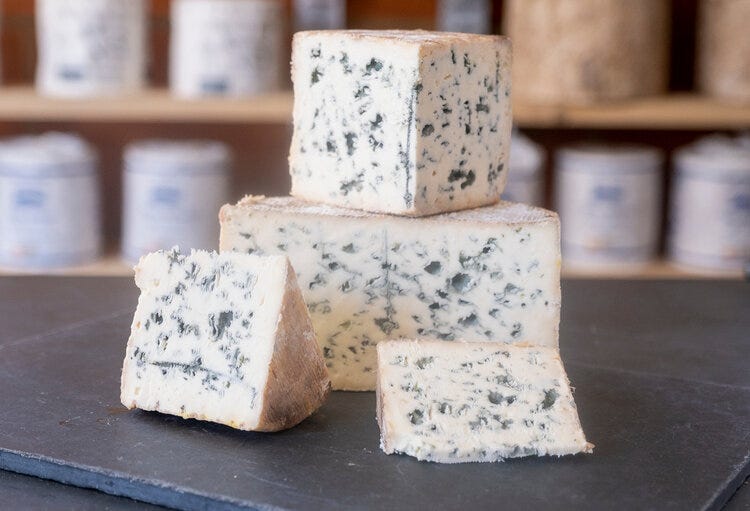
1924
Made at Fromagerie de Laqueuille in the Auvergne, France.
Pasteurised cow and sheep’s milk, animal rennet.
I don’t know if this is just my romantic cheesemonger’s soul, but I get an element of minerality in this cheese, which I like to think comes from the soil of this once tumultuously volcanic region, one of my favourite places in France. Another sweet biscuity cheese with some umami, but still well-balanced and approachable - I think the addition of cows’ milk softens the piquancy that often characterises sheep’s milk blues. Eating Roquefort for example can produce a sensation in the nasal passages like that you get after being properly dumped by a big wave at the beach, a feeling I call ‘extreme cheesing’, and which can be pretty enlivening. The two cheeses are related in a way. Roquefort got its PDO in 1925 - the first cheese to attain this honour - which stipulated that the cheese be made from just sheeps’ milk. Before this moment it was traditional to make it from whatever milk you had to hand. The mixed milk 1924 references this pre-PDO style, possibly the most passive-aggressive named cheese in the world.
This week’s recommendations:
Substack: Pretty Girls Eat Guts (just for that title really): Cathedral, Champagne, Ham, Glitter which took me back to Reims, debunked some food and drink myths (I love a good debunk) and, crucially, contains mention of Roquefort ice cream! Come on guys! Where is my Beenleigh ice cream, hmm?
Book: Gastrophysics, the New Science of Eating, by Charles Spence. At last I now understand why washed-rinds smell more challenging than they taste. No I’m not going to tell you. Read the book.
Podcast: The British Food History Podcast with Neil Buttery (good name…) in particular the episode on the Cheese Manuscript obvs.
Yes! Blue cheese IS for life, not just for Christmas! 💙
You’re so right about Beenleigh ice cream, Ned! I’d love love love to try a spoonful of this! Gap in the market…?🫣
Also, as a relative newbie to cheese, especially blue cheese, your articles always teach me new types to look out for; thank you for that!