
Affinage
Or, The Ripening of Cheese

The most fun I ever had at Neal’s Yard Dairy was in the cellar with Bill Oglethorpe. It was the early noughties, I was a starry eyed Younger Monger back then and Bill was the head affineur - an enigmatic man prone to gnomic statements about the mysteries of cheese, its making and ripening. I learnt a lot about all that over my years in the cellar with Bill, and I like to refer to him as the Yoda to my Luke Skywalker of cheese. Affinage - the maturation of cheese - is at once a science, a craft and an art. The French take affinage pretty seriously, as you can imagine. Affineurs can become a Meilleur Ouvrier de France (MOF), a coveted award given to masters of their craft which carries with it the honour of wearing a tricouleur collar on your work shirt. The British don’t even have a word for it, so we borrow the French one.
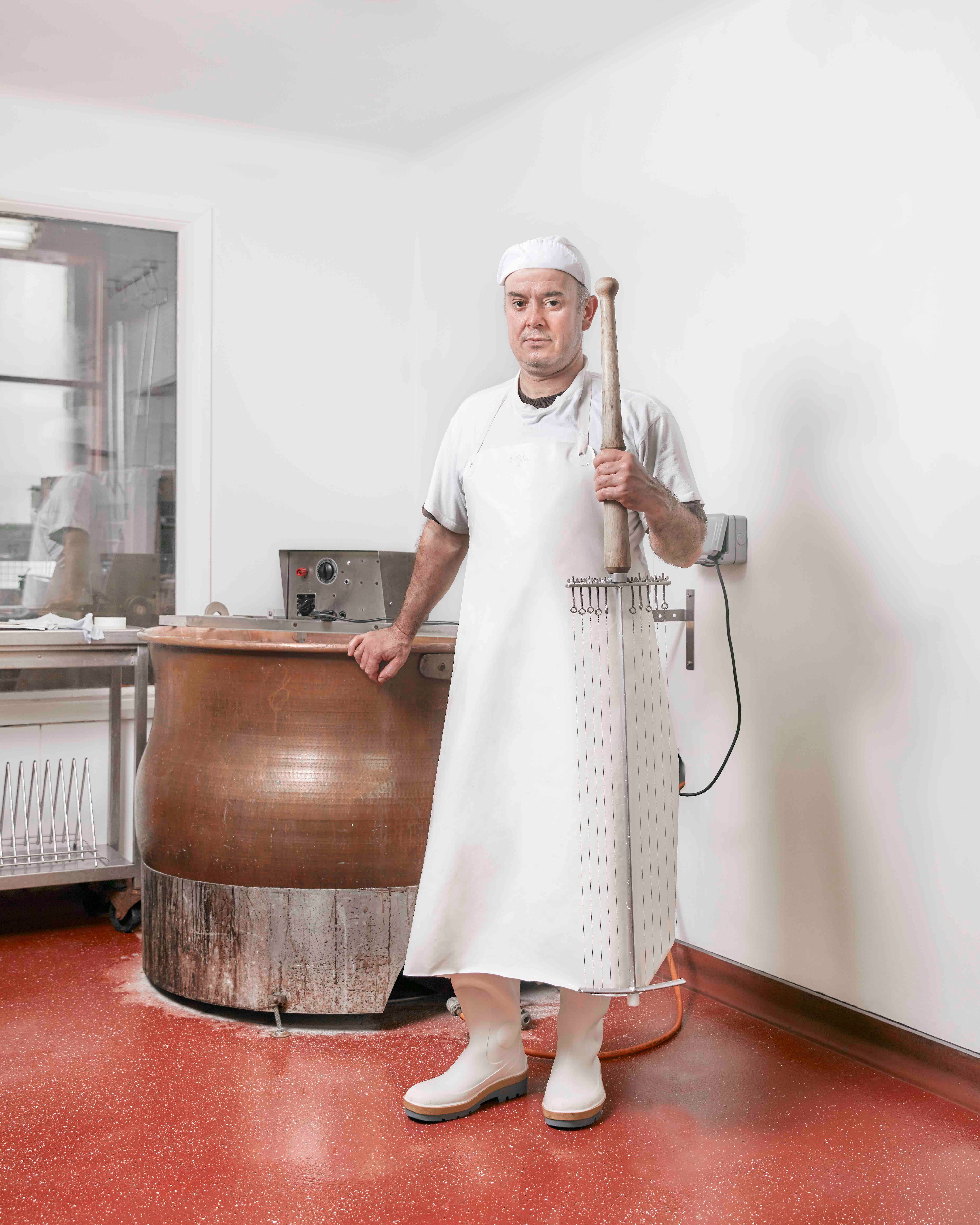
I suspect that our lack of an affinage culture is not because we are less civilised than the French but that our traditional cheeses require less intervention during maturation. Most of them are hard, or semi-hard, and so their lower moisture content makes them less changeable over time; and instead of developing a rind, mature more from the action of bacteria on the fats and proteins in the body of the cheese. Still, the British affineur has plenty of responsibility for their charges. The first tenet of affinage is simple: don’t ruin the cheeses. This starts with keeping them in the correct conditions, broadly speaking, a temperature of around ten to twelve centigrade and humidity of up to ninety percent, which is pretty much what you’d find in a cellar or cave, hence the cave-matured cheeses of Wookey Hole and Cheddar Gorge in Somerset, the home of Cheddar. Not everyone has access to either and most Cheddars are matured in barns on their home farms. It’s quite something to see thousands of wheels of Cheddar with their dappled rinds tending to grey as they mature, sitting on their shelves in serried ranks like dreadnought battleships steaming out of the mist at Jutland. The sight always makes me a bit weepy - I tend to get emotional in the presence of large amounts of cheese.
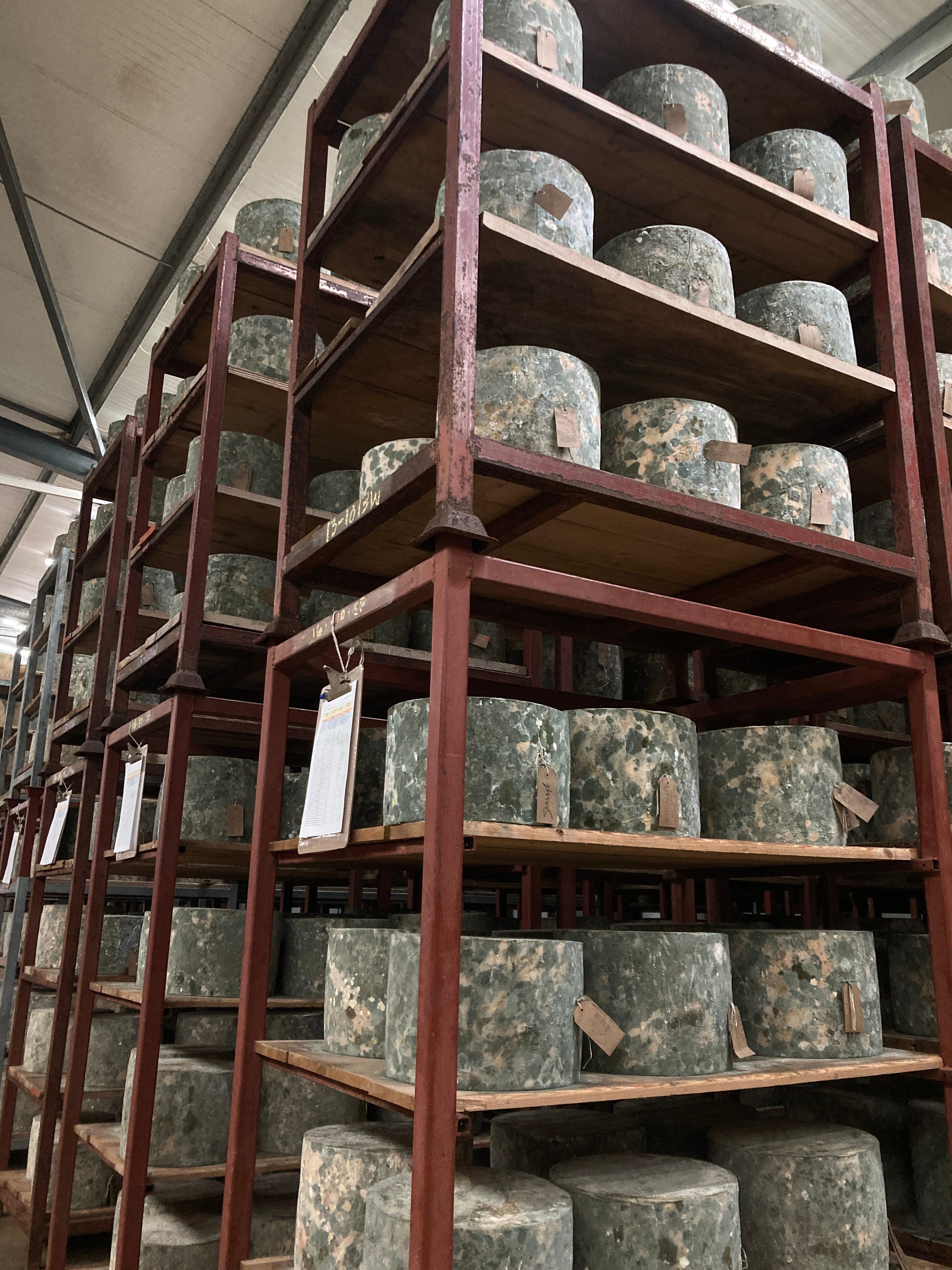
Nothing is simple with proper cheese, which changes from batch to batch along with the weather, the feed and even the moods of the animals and cheesemakers. The affineur has to be on top of their game at all times, tasting the cheeses as they mature and deciding which batches can carry on as they are, which are a bit shy and might need a bit more warmth to get going, or which are getting carried away and need to slow down a bit. This stands for all cheeses, including the less volatile harder ones. Also even clothbound hard cheeses need to be turned and rubbed, which, aside from lots of washing, is the main occupation of the affineur. We turn cheeses so that every surface gets an even exposure to the air, and to make sure that when they are young and softer that they maintain their shape, and also so that they don’t get sticky bottoms. For Cheddars and other clothbound cheeses, we rub them to control the mould growing over the cloth so that it doesn’t keep in too much moisture. This mould does play a part in ageing these kinds of cheeses, adding a note of cool damp stone reminiscent of a country church. Cheddars weigh around twenty-four kilos each, and turning them is quite a business They are oddly fragile, at least on their edges which if dropped can crack and let in unwanted microbes or even the dreaded cheese mite, a pesky arachnid with a taste for cheese. I have spent an inordinate amount of my working life carrying heavy things, and I can tell you that carrying heavy, fragile and very expensive things - a whole Cheddar might be worth up to a thousand pounds - is very demanding indeed. Not dropping one, when you are tired out after turning loads of them requires every bit of the cheesemonger’s will.
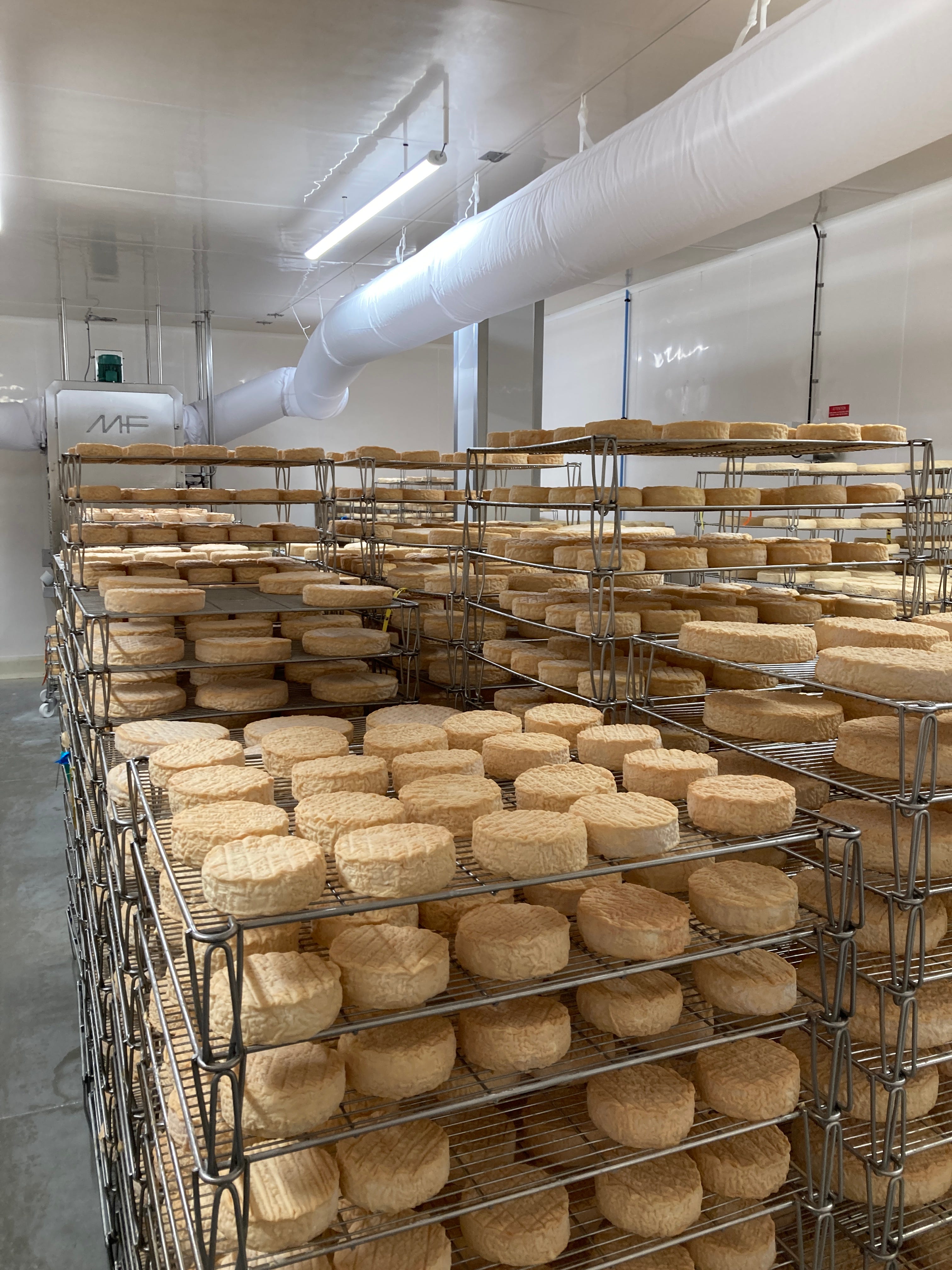
Softer cheeses, with their higher moisture content, are more volatile and changeable, requiring more intervention on their journey to maturity, and their transformation thus feels more magical. Mould-ripened cheeses like Brie or its English cousin Baron Bigod arrive in the cellar rindless, firm like feta with a pale cream colour, and a simple fresh flavour of soured milk. The first job is to lay them out on racks, well spaced so that the air can flow around them. Within a day or so they begin to develop a misty penumbra made up of minute filaments of mould on their top sides which the affineur pats down before turning the cheese. This patting knits those filaments together creating the velvety covering of mould which will break down the fats and proteins in the paste softening the texture and developing complex flavours - those notes of mushrooms, steamed cabbage and pepper that we expect from this family. This requires a gentle touch so as not to damage the rind, and as always, constant attention. If the rind develops to quickly the outside of the paste can become too liquid while the centre remains firm, or become too thick creating a distracting texture as you bite into the cheese.


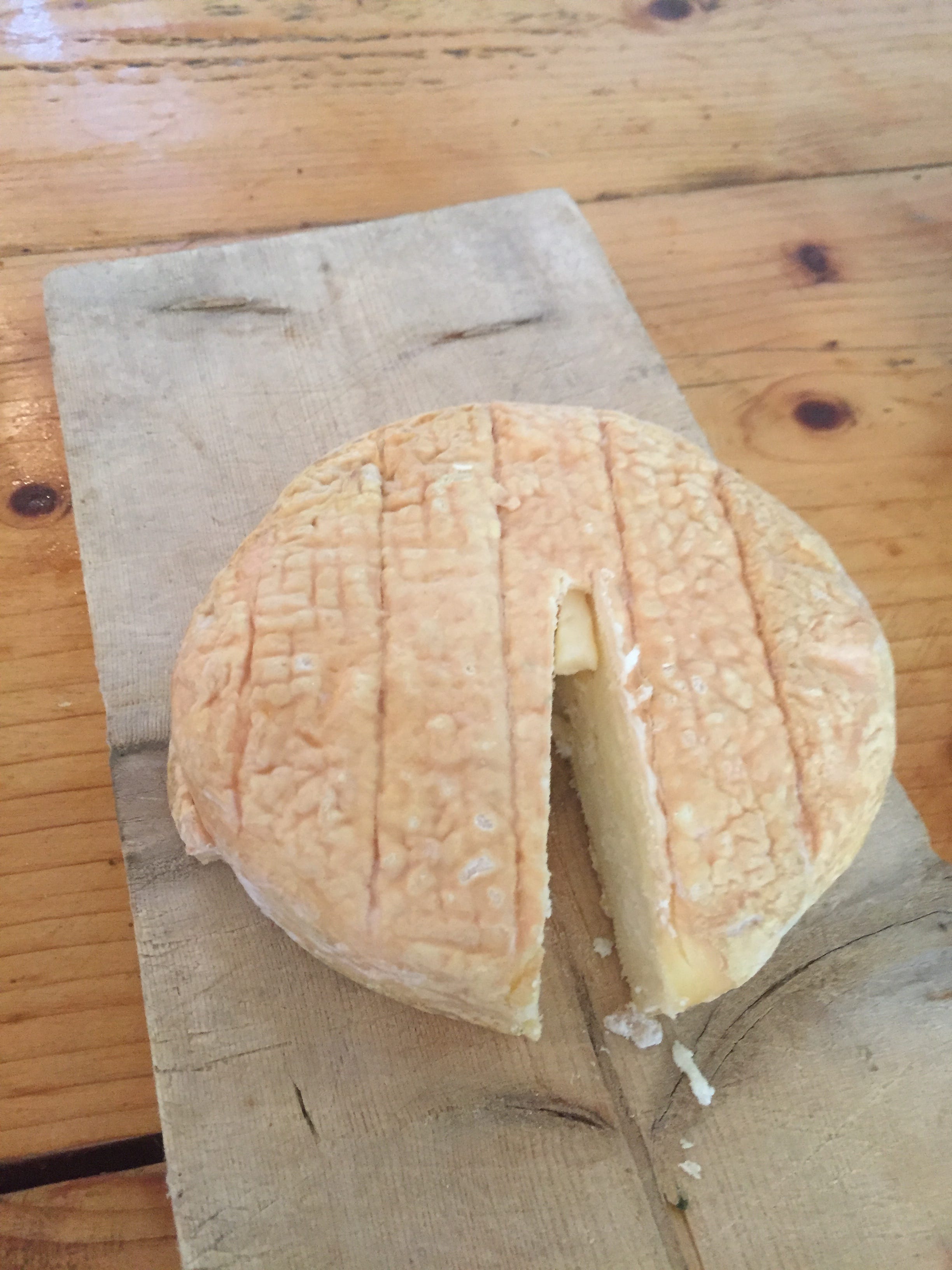
Washed-rinds, like the French Epoisses, or the amusingly named Stinking Bishop arrive in the same state but are instead washed in a brine solution. The salty water discourages mould growth and favours the development of the Brevi Bacterium Linens bacteria, B. Linens to its friends. This helpful little microorganism creates orange-pink rinds and a funky intimate aroma, also softening their texture and lowering acidity. This again requires skill and attention, the brine must be of the right concentration for the cheeses, and you need to get the washing regime right - usually more frequent in younger cheeses, tailing off as they age. The transformation into rumpled-rinded multi-coloured cheeses with oozing centres and complex flavours is marvellous to behold, no less so now than it was the first time I saw it, and it feels equally marvellous to have had some part in the process. After my first few goes at washing cheese, drunk with power, I wanted to wash all the cheeses in the business just to see what would happen - at which Bill laughed, ‘yeah that happens to everyone the first time they wash some cheese.’ Turning hundreds of cheeses every day might seem tedious but the work is meditative, calming, even spiritually fulfilling. At the end of a long day I would stand in the cellar for a moment, thinking about all my microbial colleagues doing their work and feel a sense of love for them.
Affinage is intellectually demanding, and requires a certain mental agility. You can’t just follow a set of fixed instructions for every cheese, as I found out one morning in the cellar when I got in early and began laying out the new delivery of Wigmores on the racks - a delicate floral mould-ripened cheese from Berkshire which goes from hilariously bouncy in its youth to deliciously liquid when it matures.
‘Gee, what are you doing?’ said Bill when he arrived - he used to say that to me a lot.
‘What we did last week Bill, why?’
‘Touch them again, see, they’re quite moist, we should put them in the cold room under the fan for a bit to dry out more.’
Having felt that I was beginning to get the hang of things, I expressed my frustration at not just having a fixed schedule, even just for one type of cheese, at which Bill dropped one of his classic nuggets,
‘If you don’t play with your cheese, it will play with you.’
I think he meant that you need to adopt an inquisitive, flexible and even playful attitude to looking after your cheeses or they will go funny on you. As a recovering jazz musician, this attitude felt familiar to me. In the same way that I tried to explore a tune not just play it the same way every time, so the affineur responds to each batch of cheese with a fresh and open mind. On that note, as it were, I have another musical analogy for affinage, which is that its practitioners are like mixing engineers, in that if a band took their tune to three different studios, they might end up with three quite different tracks. In the same way different affineurs have their own house style, and might get quite different outcomes with the same cheese.
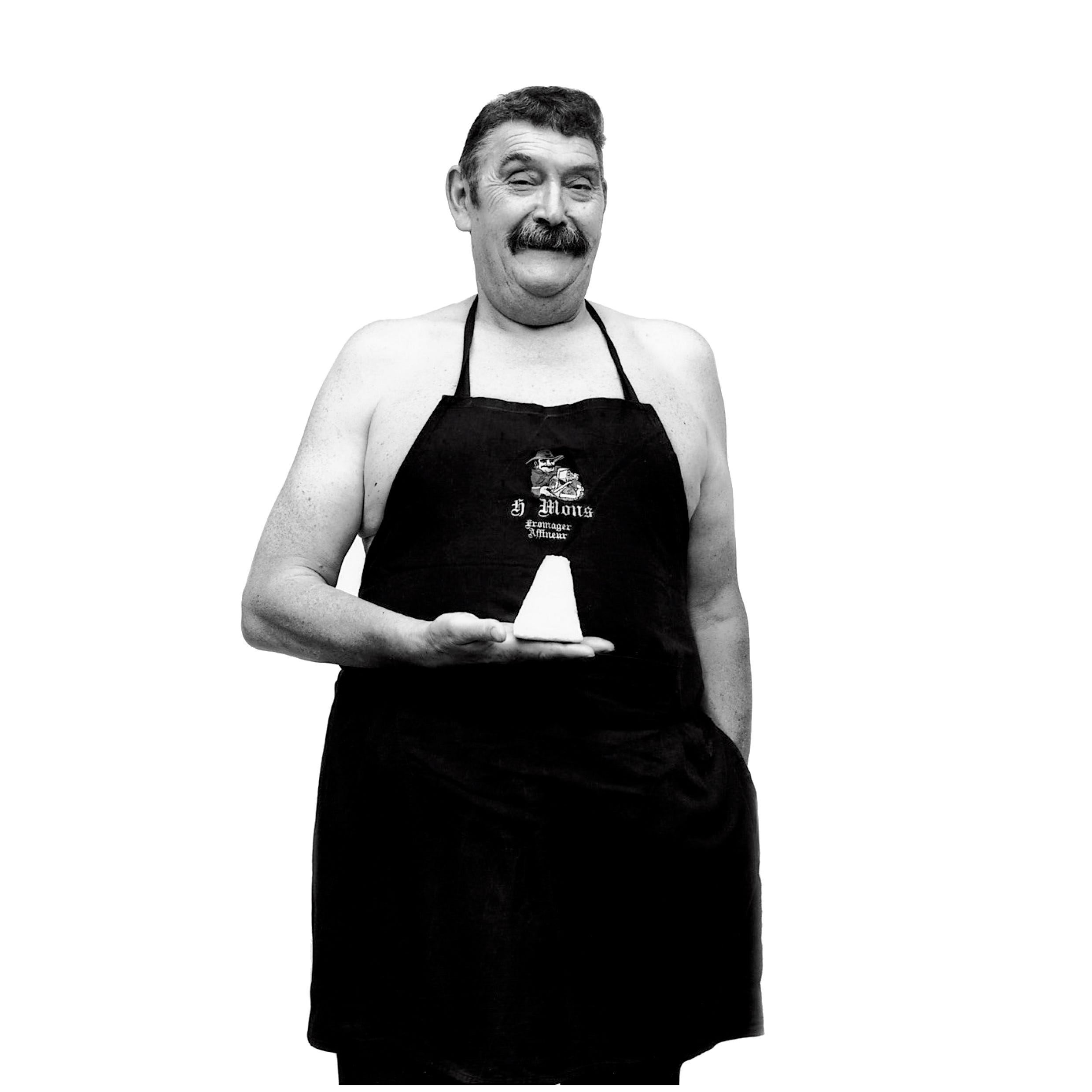
When I described the difference between mould-ripened and washed-rind, I was actually being a little simplistic. Really for soft cheeses, you generally want to see a vibrantly multicultural population of different microbes at work on their surfaces; some bacteria on the mould ripened, some moulds on the washed-rinds, and maybe a few yeasts here and there on both. Recently, cheese scientists have discovered that the various microbes do more than simply contribute their characteristic flavours to the mix, in fact the dynamic interaction between them as the cheeses ripen is much more important for the end result. To take just one example, Geotrichum, the wrinkly yeast-like mould, which contributes cabbagey and mustard-like flavours to the cheese, also ameliorates the bitterness which the snowy white Penicillium Candidum mould can contribute to the flavour. It’s a sign of human inquisitiveness and ingenuity that cheesemakers and affineurs have been fostering these symbiotic interactions between microbes centuries, if not millennia before microbiologists were able to give an account of the underlying processes. That affinage sits in the intersection between craft and science is nothing new to its practitioners. As eminent affineur Hubert Mons - first of his name - who opened the business in 1950s, said, his work was seventy percent empirical knowledge, gained from experience, and thirty percent understanding the underlying process. Hubert’s son Laurent, who now teaches Mons’ famous affinage course, says that these days that ratio is more like sixty/forty in the other direction, but this is still a pretty strong showing for craft knowledge, given the advances in microbiology over the last half-century.
Having mastered the essentials, like not ruining the cheese, and growing a mould or bacterial rind on the softer ones, affineurs have been known to indulge in more florid displays of artistry. Washing in various sorts of booze has a long history; the monastic cheesemakers of Belgium washed theirs in beer and some still do. There is some argument about what this does other than encourage the fulsome B. Linens, but I like to think that different beers might leave traces of their flavour, that alcohol might affect how the various microbes interact with each other, and unpasteurised beers might still contain some active yeasts which might transfer to the rinds. The Burgundian Epoisses is washed in the fiery grape spirit Marc de Bourgogne, and there is a theory that this acted as a sort of anti-microbial defence. If so then clearly the local strains of B. Linens must developed an immunity because boy is that a funky cheese.
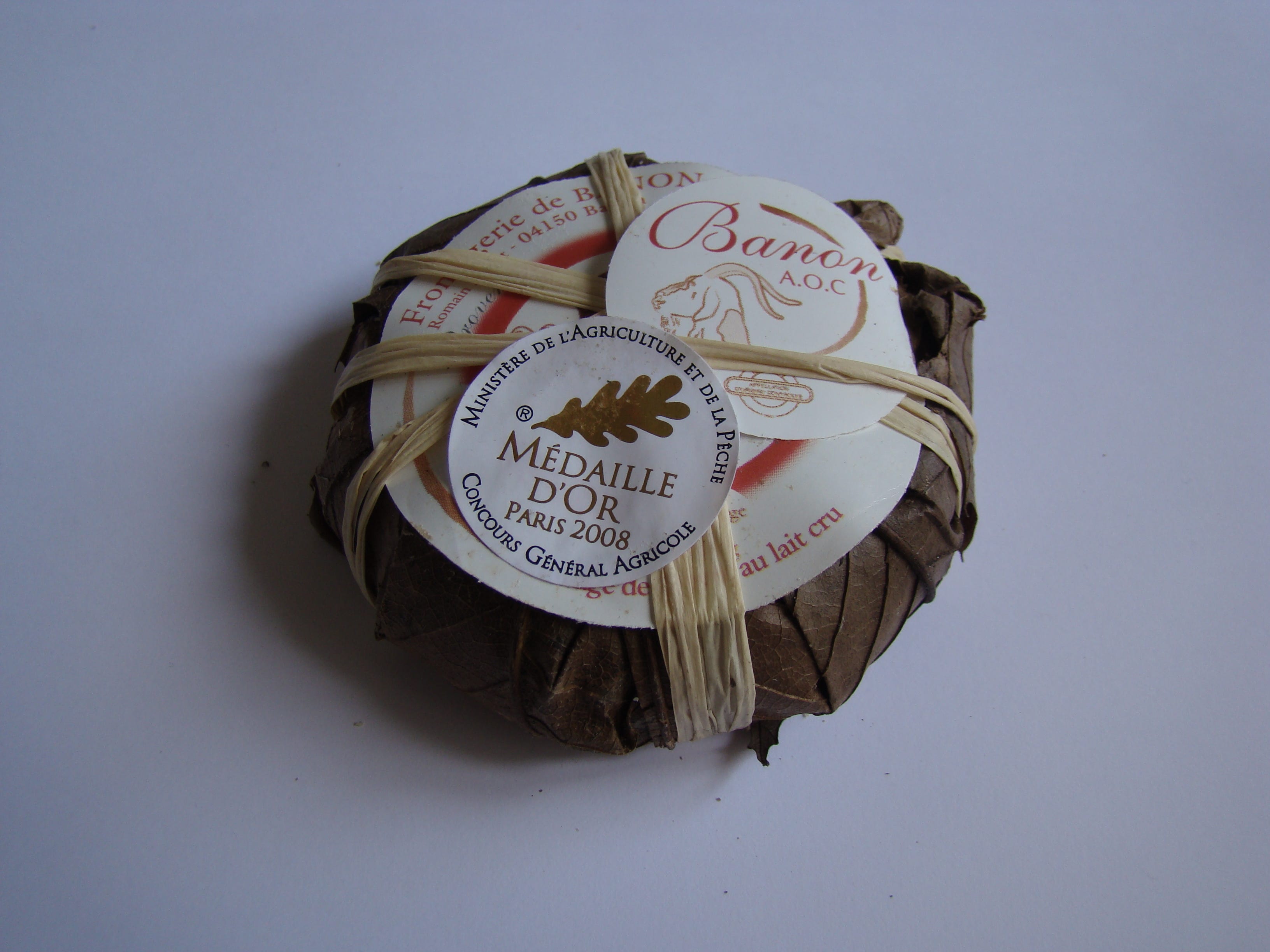
I’m not sure if wrapping cheese in leaves counts as affinage or making, but the practice can certainly add to its character. The Provençal goat’s cheeses Banon and Mistralou are wrapped in chestnut leaves, which seem to impart a tannic nutty note; Cornish Yarg’s nettles impede mould growth leaving the cheese zesty and fresh; Rogue River Blue’s brandy-soaked vine leaves add an unsurprisingly boozy fruitiness to the powerful blue flavour. All these cheeses also look very beautiful, which only adds to the experience.
If there is one very hard-won benefit of almost losing all of our traditional cheese craft in the UK, it is that we might be more adventurous in our making and affinage than our Continental counterparts, whose traditions have been much better preserved. Nowhere is this better-expressed than at the affineur of the year awards that I talked about recently, with their beetroot powders, and smoked meads, hay, and hops, and various forms of smoking. This year Laurent Mons and his fellow teacher Emma Young announced the start of the same competition in France, in which he freely submitted that they might struggle to get French affineurs, more steeped in their tradition, to take such creative risks.


I don’t know if this all sounds a bit complicated and challenging, most worthwhile things are. The great thing about appreciating the craft, science and art of affinage, is that after you have admired the appearance, and paid a quiet, respectful homage to all the work that has gone into the cheese, you get to eat it. This is arguably a more visceral way of experiencing art than merely looking at it or listening to it. I am going to stop talking now and go and do just that.
Thank you to Jane Quicke of Quicke’s Cheddar for a succinct yet comprehensive answer about ripening Cheddar.
This week’s recommendations:
Substack: Emily Nunn’s Department of Salad, Use Your Cheese As You Please. Nuff said.
Book: Girly Drinks, by Margaret O’Meara Someone told me about this at a tasting this week, and it sounds fantastic - the forgotten history of women and booze. I am going to read it with my cheese.
Podcast: Jam Tomorrow, by Ros Taylor, About post-war British history and how our lives changed. If you listen to the one about the Poll Tax riot you might hear a familiar voice…
‘ Hubert Mons, first of his name,’ 😆